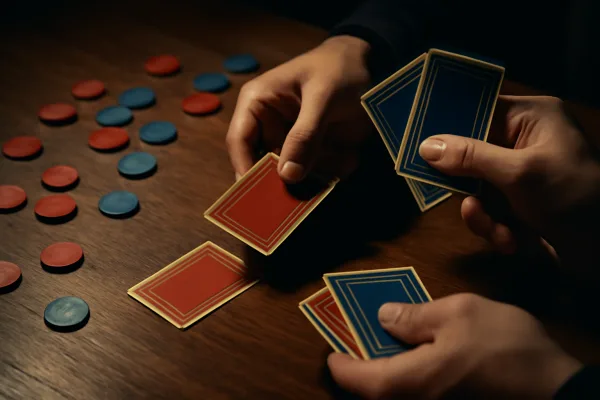
Secret Hitler has become one of the most popular social deduction board games in the world since its record-breaking Kickstarter campaign in 2015, which raised over $1.4 million from more than 34,000 backers. The game combines hidden role mechanics with a political simulation that creates tense, dramatic, and often hilarious game nights. If you are looking for a social deduction game that plays in 30 to 60 minutes with 5 to 10 players, Secret Hitler deserves a prominent place in your collection.
What sets Secret Hitler apart from other social deduction games is its policy-passing mechanic, which creates ambiguity even when players are telling the truth. In games like Werewolf or Mafia, deception is binary: you are either lying about your role or you are not. In Secret Hitler, the game system itself generates uncertainty through the random policy deck, meaning that even an honest president or chancellor might be forced to make a move that looks suspicious. This designed ambiguity is the engine of the game’s legendary ability to generate accusations, debates, and dramatic reveals.
This comprehensive guide covers everything from the basic rules and setup to advanced strategies that will help you dominate at your next game night, whether you are playing as a Liberal trying to save democracy or a Fascist working to undermine it from within.
How Secret Hitler Works: Rules for New Players
Secret Hitler is a social deduction game for 5 to 10 players. At the beginning of the game, each player is secretly assigned one of three roles: Liberal, Fascist, or Hitler. The Fascists know who each other are and who Hitler is. Hitler does not know who the Fascists are (in games with 7 or more players). The Liberals do not know anyone’s identity. The game plays out over a series of rounds in which a President and Chancellor work together to enact policies.
The basic flow of each round is:
- Presidential nomination: The current President nominates another player to serve as Chancellor
- Election: All players vote yes or no on the proposed government. If a majority votes yes, the government is formed. If not, the presidency passes to the next player.
- Policy enactment: The President draws 3 policy tiles from the deck (a mix of Liberal and Fascist policies), discards one face-down, and passes the remaining 2 to the Chancellor. The Chancellor then discards one and enacts the other.
- Presidential powers: When certain Fascist policies are enacted, the President gains a special power, such as investigating another player’s party membership, choosing the next President, or executing a player.
The game ends when one of three conditions is met:
| Win Condition | Who Wins | How It Happens |
|---|---|---|
| 5 Liberal policies enacted | Liberals | The government successfully passes 5 Liberal policies |
| 6 Fascist policies enacted | Fascists | The government passes 6 Fascist policies (or 3+ and Hitler becomes Chancellor) |
| Hitler is assassinated | Liberals | The President uses the execution power on Hitler |
| Hitler becomes Chancellor | Fascists | After 3+ Fascist policies are enacted, Hitler is elected Chancellor |
The genius of the game lies in the policy deck. The deck contains 6 Liberal and 11 Fascist policies, meaning the odds naturally favor Fascist policies being drawn. This creates a situation where even a fully Liberal government of President and Chancellor may be forced to enact a Fascist policy simply because no Liberal policies were drawn. The Fascists exploit this ambiguity, claiming they had no choice when they deliberately discarded Liberal policies, while Liberals struggle to prove they acted in good faith.
The Ideal Player Count: Finding the Sweet Spot
Secret Hitler scales differently at each player count, and the experience changes significantly based on how many people are at the table. Understanding these differences will help you plan the best possible game night.
| Players | Liberals | Fascists | Hitler | Game Feel | Recommendation |
|---|---|---|---|---|---|
| 5 | 3 | 1 + Hitler | Knows Fascist | Tight, logical, less chaotic | Good for learning; feels more like a puzzle |
| 6 | 4 | 1 + Hitler | Knows Fascist | Balanced, fast-paced | Great for casual game nights |
| 7 | 4 | 2 + Hitler | Does NOT know Fascists | Sweet spot — enough chaos for drama, enough info for deduction | Best overall experience for most groups |
| 8 | 5 | 2 + Hitler | Does NOT know Fascists | Dynamic, multiple alliances form | Excellent for experienced groups |
| 9 | 5 | 3 + Hitler | Does NOT know Fascists | Chaotic, difficult for Liberals | Challenging and dramatic |
| 10 | 6 | 3 + Hitler | Does NOT know Fascists | Epic, unpredictable, long games | Best for dedicated game nights with experienced players |
The most significant gameplay change happens at 7 players, when Hitler no longer knows who the Fascists are. This creates a fascinating dynamic where the Fascists must find ways to signal their identity to Hitler without alerting the Liberals, while Hitler must navigate the game without knowing who to trust. This hidden information layer adds enormous strategic depth and is why many experienced players consider 7 to 8 the ideal player count.
Strategy Guide for Liberals
Playing as a Liberal in Secret Hitler is deceptively challenging. You might think that simply telling the truth and making logical decisions would be enough, but the game’s inherent ambiguity means that honest behavior can look exactly like deceptive behavior. Here are strategies that experienced Liberal players use to give their team the best chance of winning. You might also enjoy our guide on The Resistance Avalon.
Track the policy deck mathematically. The deck contains 6 Liberal and 11 Fascist policies. As policies are enacted and discarded, the remaining composition of the deck changes. If 3 Fascist policies have been enacted and the President and Chancellor both claim to have seen all Fascist policies, you can calculate the probability of this being true based on the remaining deck composition. This mathematical approach takes much of the guesswork out of evaluating claims.
Pay attention to who nominates whom. The nomination pattern reveals alliances. Fascists will typically try to get Hitler into the Chancellor seat (especially after 3 Fascist policies are enacted), so watch for players who repeatedly nominate the same person or who nominate players that others have flagged as suspicious. Conversely, a player who consistently nominates proven Liberals is more likely to be Liberal themselves.
Use the government conflicts as information. When a President and Chancellor disagree about what policies were drawn (the President claims they passed a Liberal, but the Chancellor enacted a Fascist), this “conflict” is one of the most valuable pieces of information in the game. At least one of the two players is lying. By tracking these conflicts and cross-referencing them with other information, you can build a picture of who is trustworthy and who is not.
Do not execute rashly. The execution power is the Liberal team’s most powerful tool, but it is also the most dangerous. Executing a Liberal hands the Fascists a massive advantage. Before executing, gather as much information as possible and build a consensus. An execution that the group agrees on is far more valuable than a unilateral decision, even if it means waiting one more round.
“In Secret Hitler, the truth is your weapon but the game is designed to make truth look like lies. The best Liberal strategy is patience, mathematics, and collective decision-making.” — No Pun Included, board game review channel
Strategy Guide for Fascists
Playing as a Fascist is widely considered the most fun and the most challenging role in Secret Hitler. You know who your teammates are (including Hitler), but you must work covertly to advance your agenda while maintaining the appearance of being a loyal Liberal. The best Fascist players are not the best liars — they are the best actors and strategists.
Build trust early, betray late. The most effective Fascist strategy is to play as a genuine Liberal for the first several rounds: pass Liberal policies when you can, make logical arguments, and build a reputation as a trustworthy player. This early investment in credibility pays enormous dividends later when you begin to subtly advance the Fascist agenda. A player who has been trusted for three rounds can get away with moves that would be immediately suspicious from an unknown player.
Use the deck as cover. Remember that the deck contains 11 Fascist and only 6 Liberal policies. When you draw 2 Fascist and 1 Liberal policy as President, you can safely discard the Liberal and pass 2 Fascist policies to the Chancellor, claiming you drew 3 Fascist. The probability of this happening naturally is high enough that most groups will not immediately suspect deception. Use the deck’s natural bias as your alibi.
Create conflicts between Liberals. One of the most devastating Fascist strategies is to create suspicion between two Liberal players. If you can engineer a situation where two Liberals are convinced that the other is Fascist, they will spend the rest of the game working against each other instead of against you. This can be accomplished through selective policy discards, strategic nominations, and carefully worded accusations. For additional reading, visit Secret Hitler on BoardGameGeek.
Protect Hitler without being obvious. Your primary objective as a non-Hitler Fascist is to get Hitler elected as Chancellor after 3 Fascist policies are enacted (which triggers an instant Fascist victory). This means you need to protect Hitler from suspicion, execution, and investigation. However, protecting Hitler too aggressively makes both you and Hitler look suspicious. The subtlety required to protect Hitler without revealing the relationship is what makes the Fascist role so rewarding.
Strategy Guide for Hitler
The Hitler role is unique in Secret Hitler because in games with 7 or more players, you do not know who the Fascists are. You must play the game as a Liberal would, making genuine decisions based on incomplete information, while hoping that the Fascists will find ways to signal their identity to you without alerting the Liberals.
Play genuinely Liberal. This may sound counterintuitive, but the best strategy for Hitler (especially in larger games) is to play as a sincere Liberal. Pass Liberal policies when you get them, make logical arguments, and avoid anything that might attract suspicion. Your goal is to be seen as a safe, trustworthy Chancellor candidate so that when the Fascists have enacted 3 policies, the group will willingly elect you as Chancellor, triggering the Fascist victory condition.
Watch for Fascist signals. Your Fascist teammates will try to subtly communicate their identity to you. These signals vary by group and are often improvised in the moment, but common approaches include: consistent nomination of you for Chancellor, defending you during accusations, and making eye contact or subtle gestures during the Fascist reveal phase. As you play more games with the same group, you will develop a shared vocabulary of signals.
Survive at all costs. If you are executed, the Liberals win immediately. This means your top priority, above everything else, is survival. Avoid conflict, avoid suspicion, and avoid being in situations where you might be targeted for execution. If the group is debating who to execute, actively redirect the conversation toward other suspects. Your survival is the Fascist team’s most important asset.
Common Mistakes New Players Make
Every new Secret Hitler player makes certain predictable mistakes. Being aware of these mistakes can accelerate your learning curve and make your first few games more enjoyable for everyone. For more on this topic, check out our article about top social deduction games.
| Mistake | Why It Hurts | What to Do Instead |
|---|---|---|
| Fascists being too aggressive early | Draws immediate suspicion and burns credibility | Build trust first, then act subtly |
| Liberals trusting gut feelings over data | Emotions are unreliable; the game generates false signals | Track policies mathematically, focus on verifiable information |
| Voting down every government | Three failed elections in a row enact a random policy from the deck | Sometimes approve a government to see what happens (information gathering) |
| Revealing your role too early | Gives away information that the opposing team can exploit | Keep your cards close; reveal strategically |
| Ignoring the discard pile | The discard pile contains valuable mathematical information | Track which policies have been discarded to calculate remaining probabilities |
| Taking the game too personally | Accusations are part of the game, not personal attacks | Remember it is a game; celebrate good plays regardless of team |
Where to Get Secret Hitler
Secret Hitler is available through several channels at different price points:
- Official website (secrethitler.com): The game is released under a Creative Commons license, and the print-and-play version is completely free to download. This is an excellent way to try the game before buying.
- Amazon: The standard retail edition is typically priced at $25 to $35, making it one of the most affordable social deduction games on the market.
- Wooden box edition: A premium edition with wooden components is available for approximately $50 to $75. The upgraded components add a tactile pleasure to the game that many enthusiasts appreciate.
- Local game stores: Many independent game stores carry Secret Hitler. Buying local supports your community’s gaming ecosystem.
- Board Game Arena (online): A digital implementation is available for free on Board Game Arena, allowing you to play online with friends or strangers.
The game’s Creative Commons license means you can legally print your own copy for personal use. The official print-and-play files include everything you need: role cards, policy tiles, board graphics, and rules. Many crafty players have created beautiful custom versions using the free files as a starting point, adding personal touches like custom art, premium card stock, or themed modifications.
Conclusion
Secret Hitler is a masterpiece of social deduction game design. Its policy-passing mechanic creates genuine ambiguity that elevates the genre beyond simple lying games. The interplay between Liberals, Fascists, and the hidden Hitler creates a rich strategic landscape that rewards both analytical thinking and social intuition. At $25 to $35 for the retail version, or free for the print-and-play edition, it offers extraordinary value for a game that your group will play dozens or even hundreds of times.
Whether you are a board game veteran or someone who has never played a social deduction game, Secret Hitler is an outstanding choice for your next game night. Gather 5 to 10 friends, clear the table, and prepare for an evening of accusations, alliances, betrayals, and unforgettable moments.
Found this helpful? Share it with your game night crew.
Frequently Asked Questions
Is Secret Hitler appropriate for younger players?
The game is recommended for ages 13 and up. The gameplay involves deception and political themes, but there is no graphic content. Some families use the community-created reskin “Secret Voldemort” which replaces the political theme with a Harry Potter theme, making it more comfortable for younger players and mixed groups.
How long does a typical game of Secret Hitler take?
Most games last 20 to 45 minutes, depending on the player count and how quickly decisions are made. Games with 5 to 6 players tend to be shorter (15 to 25 minutes), while games with 9 to 10 players can run 40 to 60 minutes. The relatively short play time makes it easy to play multiple games in one evening. Learn more at Secret Hitler.
Can you play Secret Hitler with just 4 players?
The official rules require a minimum of 5 players. With 4 players, the balance between Liberals and Fascists breaks down, and the game loses its strategic depth. If you only have 4 players, consider alternatives like The Resistance: Avalon or Coup, which play well at lower counts.
What is the best strategy for the first game with new players?
For the first game with new players, play with 5 to 7 players and take extra time to explain the policy-passing mechanic and the three win conditions. Encourage open discussion and remind players that accusations are part of the fun. After the first game, do a quick debrief where players reveal their roles and discuss key moments. This reflection dramatically improves the experience in subsequent games.
Is Secret Hitler better than Werewolf?
The two games serve different purposes. Secret Hitler is better for groups of 5 to 10 who want structured strategic gameplay with no player elimination. Werewolf is better for larger groups (10 to 20+) who enjoy the theatrical moderator role and are comfortable with player elimination. Many game groups enjoy both for different occasions.
Secret Hitler House Rules and Variants
One of the reasons Secret Hitler has such an active community is the variety of house rules and variants that groups have developed to customize the experience. While the base game is excellent, these modifications can add variety after many plays and can also address specific group preferences or player counts.
The Blind Hitler Variant (5-6 players): In the standard 5-6 player game, Hitler knows who the Fascist is, which some groups feel gives the evil team too much information at low player counts. In this variant, Hitler does not know the Fascist at any player count, making the game more challenging for the evil team and more balanced overall. This variant is popular in competitive communities.
Timed Discussions: Some groups add a 3 to 5 minute timer for the discussion phase before each vote. This prevents analysis paralysis, keeps the game moving, and forces players to make decisions under pressure, which often leads to more dramatic mistakes and reveals. Many tournament settings use timed discussions.
No Table Talk During Policy Phase: In this variant, the President and Chancellor cannot speak to each other or to the group while drawing and passing policies. This eliminates the possibility of the Chancellor pressuring the President or vice versa, and it forces players to rely entirely on post-policy discussion to evaluate what happened. We also have a great resource on game night tips that you might find helpful.
Election Tracker Variant: Instead of automatically enacting a policy after three failed elections, some groups allow a vote on whether to enact the top policy or shuffle it back. This variant gives the group more control but can slow down the game.
Secret Voldemort (Family-Friendly Reskin): The most popular thematic variant replaces the political theme with Harry Potter. Liberals become the Order of the Phoenix, Fascists become Death Eaters, and Hitler becomes Voldemort. The gameplay is identical, but the theme is more comfortable for family game nights and groups that prefer to avoid political imagery. Free print-and-play files for Secret Voldemort are available online.
Secret Hitler with a Moderator: For larger groups (9-10 players), some experienced players recommend adding a non-playing moderator who manages the fascist reveal phase, tracks policy discards, and resolves rule disputes. This allows the game to flow more smoothly and prevents the common issue of players accidentally revealing information during the setup phase.
When introducing house rules to your group, start with the base game for the first few sessions and only add modifications after everyone is comfortable with the standard rules. House rules work best when they address a specific issue your group has identified, rather than being added for novelty. And always make sure everyone agrees on the rules before the game begins — nothing kills a game night faster than a rules argument mid-game.
Pro tip for tournament play: If your group becomes competitive enough to want structured tournament play, the Secret Hitler community has developed several tournament formats. The most common is a Swiss-system tournament where players are randomly assigned to tables of 7 to 8 for each round, with points awarded based on which team wins and individual performance metrics like successful policy passes and correct accusations. Tournament play brings out the highest level of strategic thinking and is an incredible experience for dedicated players.
The flexibility of Secret Hitler’s rules and the creativity of its community mean that the game continues to evolve even years after its initial release. Whether you prefer the pure base game or enjoy experimenting with variants, there is a version of Secret Hitler that is perfect for your group.