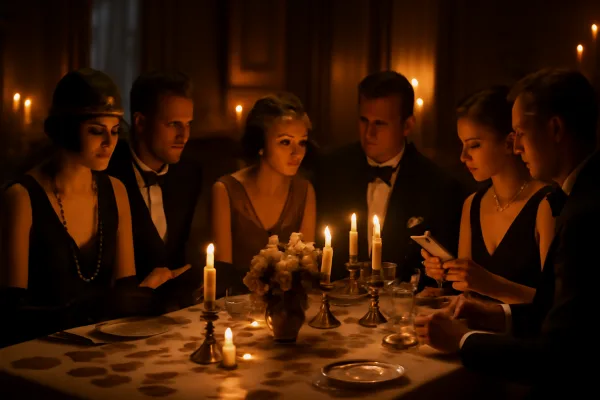
Hosting a murder mystery party is one of the most memorable and entertaining events you can plan for friends, family, or coworkers. Unlike a typical dinner party where conversation drifts naturally, a murder mystery creates a structured evening of intrigue, laughter, dramatic revelations, and the unforgettable thrill of unmasking the killer. If you have ever wanted to host one but felt overwhelmed by the planning, this step-by-step guide breaks the entire process into 9 manageable steps that anyone can follow.
Murder mystery parties have surged in popularity over the past five years, with Google Trends showing a 340% increase in searches for “murder mystery party” between 2019 and 2025. The rise of true crime entertainment, social deduction games like Among Us, and a post-pandemic desire for immersive in-person social experiences have all contributed to this trend. Today, there are more resources, kits, and scripts available than ever before, making it easier than ever to host a professional-quality event in your own home.
Whether you are planning an intimate dinner for 6 or a grand event for 30, whether your guests are experienced mystery enthusiasts or complete beginners, this guide covers everything from choosing the right mystery to creating an atmosphere that will have your guests talking about the evening for years to come.
Step 1: Choose Your Murder Mystery Format
The first decision you need to make is what format your murder mystery will take. There are several distinct formats, each with its own advantages and ideal use cases. Understanding these formats will help you choose the one that best fits your guest list, venue, and comfort level as a host.
| Format | Players | Duration | Host Effort | Best For | Cost |
|---|---|---|---|---|---|
| Boxed kit (e.g., Hunt A Killer, Masters of Mystery) | 6-20 | 2-4 hours | Low — everything included | First-time hosts, corporate events | $20-$50 |
| Downloadable script (e.g., My Mystery Party, Night of Mystery) | 6-40+ | 2-4 hours | Medium — print and organize materials | Customizable events, large groups | $25-$50 |
| Free online scripts | 6-12 | 1-3 hours | Medium-High — more DIY preparation | Budget-friendly events, small groups | Free |
| Custom/original mystery | Any | Any | Very High — writing and designing from scratch | Experienced hosts, unique themes | Free (time investment) |
| Professional service (hired actors/facilitators) | 10-100+ | 2-5 hours | Very Low — professionals handle everything | Corporate events, milestone celebrations | $500-$5,000+ |
For your first murder mystery party, a boxed kit or downloadable script is the recommended starting point. These products include character descriptions, clue packets, host guides, and all the materials you need to run the event successfully. The investment of $25 to $50 provides a significantly better experience than trying to create a mystery from scratch, and the step-by-step host guide eliminates the guesswork.
Popular murder mystery kit providers include:
- My Mystery Party (mymysteryparty.com): Over 200 themes for 6 to 120+ players, with options for all ages
- Night of Mystery (nightofmystery.com): Pre-made kits with detailed character packets and host timelines
- Hunt A Killer (huntakiller.com): Subscription boxes and one-time mystery kits with high production values
- Masters of Mystery: Reusable party game with multiple mystery scenarios in one box
- Freeform Games (freeformgames.com): Highly rated interactive mysteries where players drive the action
Step 2: Select a Theme That Matches Your Guest List
The theme of your murder mystery sets the tone for the entire evening and determines the costumes, decorations, food, and atmosphere. The best theme is one that excites your specific guests and matches the overall vibe you want to create.
Popular murder mystery party themes include:
- 1920s Speakeasy / Great Gatsby: Flapper dresses, jazz music, prohibition cocktails, art deco decorations. One of the most popular themes because the costumes are glamorous and widely available.
- Hollywood Red Carpet: Guests play movie stars, directors, and producers at an awards ceremony. Great for groups who enjoy dressing up but do not want period costumes.
- Haunted Mansion / Gothic Horror: Perfect for Halloween parties. Candles, fog machines, gothic decorations, and spooky characters create an immersive atmosphere.
- Tropical Island / Pirate: Ideal for summer parties or outdoor venues. Hawaiian shirts, tiki torches, and pirate accessories create a relaxed, fun atmosphere.
- Medieval / Fantasy: Knights, queens, wizards, and rogues. Great for groups who enjoy Renaissance faires or fantasy fiction.
- Wild West: Cowboys, saloon owners, outlaws, and sheriffs. Easy costumes and a fun, energetic atmosphere.
- Victorian / Sherlock Holmes: Elegant and intellectual. Perfect for literary-minded groups who enjoy classic detective fiction.
- 80s / Retro: Neon colors, big hair, leg warmers. A lighthearted theme that encourages creative costume choices.
When selecting your theme, consider your guests’ comfort level with costumes. Some people love dressing up, while others find it stressful. Choose a theme where costumes are fun but not essential. The 1920s Speakeasy theme works well because a simple black dress or suit with a few accessories (feather headband, suspenders, bow tie) creates a convincing look without requiring specialized costume purchases. You might also enjoy our guide on best murder mystery party themes.
Step 3: Send Invitations That Build Anticipation
Your invitation is the first touchpoint of the murder mystery experience, and a well-crafted invitation builds excitement and sets expectations long before the event begins. The invitation should communicate the practical details (date, time, location, RSVP deadline) while also establishing the theme and tone of the evening.
Every murder mystery invitation should include:
- The theme and time period so guests can plan costumes
- Their character name and brief description (most mystery kits provide these)
- Costume suggestions — specific enough to be helpful, flexible enough not to be stressful
- What to expect — a brief explanation of how the evening will unfold for guests who have never attended a murder mystery
- What NOT to do — a reminder not to research the mystery or read ahead if the kit instructions include character-specific information
- Food and drink details — whether dinner is included, whether to bring anything, dietary accommodation options
For a professional touch, create themed digital invitations using free design tools like Canva. Many murder mystery kits include printable invitation templates that match the theme. Send invitations at least 3 to 4 weeks before the event to give guests time to plan costumes and clear their schedules.
Step 4: Plan Your Menu Around the Theme
Food is a central part of the murder mystery party experience. A themed menu enhances immersion and gives guests another reason to remember the evening. The key is to keep the food manageable so you can focus on hosting the mystery rather than spending the entire evening in the kitchen.
| Theme | Appetizer Ideas | Main Course Ideas | Cocktail/Drink Ideas |
|---|---|---|---|
| 1920s Speakeasy | Deviled eggs, shrimp cocktail, stuffed mushrooms | Chicken piccata, beef tenderloin, Caesar salad | Old Fashioned, French 75, Sidecar, mocktail versions |
| Tropical Island | Coconut shrimp, pineapple skewers, bruschetta | Grilled fish tacos, jerk chicken, tropical rice | Mai Tai, Piña Colada, Blue Lagoon |
| Victorian/Sherlock | Tea sandwiches, scones, cheese board | Roast beef, shepherd’s pie, roasted vegetables | Earl Grey cocktails, brandy, mulled wine |
| Halloween/Gothic | Mummy hot dogs, spider web dip, “bloody” bruschetta | Black pasta, “poison” soup, graveyard cake | “Witch’s Brew” punch, black cocktails |
| Wild West | Cornbread bites, BBQ sliders, chili cups | Smoked brisket, pulled pork, baked beans | Whiskey sour, “Cactus Juice” margaritas |
Pro tip: Structure the meal around the mystery rounds. Most murder mystery games are divided into 3 to 4 rounds, with clue reveals between rounds. Serve appetizers during the introduction and first round, the main course between rounds two and three, and dessert after the big reveal. This pacing keeps the evening flowing naturally and gives guests something to enjoy during breaks in the mystery.
If cooking a full themed dinner feels overwhelming, there are simpler alternatives that still feel special: order catering that matches your theme, set up a potluck where each guest brings a themed dish, or focus on a spectacular cocktail menu with simple finger foods. The mystery itself is the main attraction; the food should enhance the experience, not overshadow your ability to host it.
Step 5: Transform Your Space with Themed Decorations
Decorations create the atmosphere that transports your guests from a regular living room into the world of the mystery. The good news is that effective mystery party decorations do not require a huge budget — creative use of lighting, fabric, and a few key props can completely transform a space.
Universal decorations that work for any mystery theme: For additional reading, visit murder mystery games.
- Dim lighting: Replace bright overhead lights with candles (real or LED), string lights, or lamps with low-wattage bulbs. Low lighting immediately creates atmosphere and mystery.
- Crime scene tape: Inexpensive rolls of caution or crime scene tape (available at party stores or Amazon for under $5) instantly signal to guests that they are entering a mystery zone.
- Character name tags: Place cards or name tags at each setting help guests remember each other’s character names throughout the evening.
- Magnifying glasses: Scatter inexpensive magnifying glasses around the space as both decorations and props.
- Background music: Create a themed playlist on Spotify or Apple Music. Jazz for 1920s, orchestral for Victorian, surf rock for tropical, etc. Keep the volume low enough for conversation.
- Evidence board: Create a corkboard or poster board with “evidence” — photos, newspaper clippings, string connections. This serves as both a decoration and a conversation starter.
Budget-conscious decorating tip: Dollar stores, thrift shops, and Amazon carry inexpensive decorations that can be remarkably effective. Black tablecloths, battery-operated candles, and a few thematic props create 80% of the atmosphere for 20% of the cost of a professional setup. Focus your spending on the items that create the most impact: lighting and one or two signature props that anchor the theme.
Step 6: Prepare Character Packets and Clue Materials
If you are using a purchased mystery kit, your character packets and clue materials will be provided. Your job is to organize them clearly so that distribution is smooth and guests receive all the information they need without confusion.
For each guest, prepare a character packet that includes:
- Character biography and backstory
- Character objectives (what their character wants to achieve during the evening)
- Secret information (what their character knows that others do not)
- Round-by-round instructions (what to reveal and when)
- Costume suggestions (if not already sent with the invitation)
Organize the clue materials by round so you can distribute them efficiently during the game. Many experienced hosts use sealed envelopes labeled “Round 1,” “Round 2,” etc., which adds to the sense of revelation when each new round begins. Place each guest’s Round 1 envelope at their seat before they arrive, and have subsequent round envelopes organized in a basket or tray that you can distribute quickly.
Print all materials on cardstock or heavy paper for a premium feel, and consider printing character bios on paper that matches your theme (aged paper for historical themes, neon paper for 80s themes, etc.). These small touches elevate the experience from a game to an event.
Step 7: Run the Evening Like a Director
On the night of the party, your role transitions from planner to director. You are responsible for guiding the flow of the evening, keeping the energy high, managing the pace, and ensuring that every guest has a memorable experience. Here is a typical timeline for a murder mystery dinner party:
| Time | Activity | Host Actions |
|---|---|---|
| 6:00 PM | Guests arrive, get into character | Welcome guests, distribute character packets, encourage mingling in character |
| 6:30 PM | Introduction and Round 1 | Read the opening narration, introduce the scenario, serve appetizers |
| 7:15 PM | Round 2 — First clue reveal | Distribute Round 2 envelopes, facilitate discussion, serve main course |
| 8:00 PM | Round 3 — Major revelation | Distribute Round 3 envelopes, manage energy and pacing |
| 8:45 PM | Final accusations and voting | Guide the accusation process, build suspense before the reveal |
| 9:00 PM | The big reveal | Announce the killer, read the solution, celebrate the winners, serve dessert |
| 9:30 PM+ | Post-game socializing | Share behind-the-scenes stories, discuss theories, enjoy the afterglow |
Pacing tips: The biggest mistake new hosts make is letting rounds run too long. Set a soft time limit for each round (15 to 25 minutes) and use transition moments, like serving a new course or distributing new clues, to move the evening forward. If conversations are dying, drop a hint or redirect attention to an overlooked clue. If energy is high and guests are deeply engaged in a discussion, let it run a few extra minutes before moving on. For more on this topic, check out our article about free murder mystery scripts.
Step 8: Capture the Memories
A murder mystery party produces incredible photo opportunities that your guests will treasure. Set up a photo station with props related to your theme (magnifying glasses, fake mustaches, top hats, feather boas, toy weapons) and encourage guests to take photos throughout the evening.
Consider these memory-making ideas:
- Hire a photographer or designate a guest photographer to capture candid moments during the mystery
- Set up a photo backdrop with themed props — a chalkboard with “WANTED” headers, crime scene tape, or a themed banner
- Create a shared album (Google Photos or iCloud) and share the link with all guests after the event
- Record the final accusation round on video — the reactions when the killer is revealed are priceless
- Award prizes for best costume, best performance, and best detective (the person who correctly identified the killer first)
These memories become the social currency that builds excitement for your next murder mystery party. When guests share photos on social media, it creates organic buzz that makes your next event even more anticipated.
Step 9: Learn from the Experience and Plan Your Next One
After the party, take 15 minutes to jot down what worked well and what you would change next time. Note which aspects of the evening generated the most excitement, which parts felt slow, whether the mystery was too easy or too difficult for your group, and any logistical issues that arose.
Common adjustments for future events include:
- Adjusting the number of rounds based on your group’s attention span
- Investing more (or less) in decorations based on the impact they had
- Simplifying or elaborating the menu based on your hosting experience
- Choosing a mystery with more or fewer characters based on your typical guest count
- Adding interactive elements like puzzles, locked boxes, or hidden clues around the venue
The best murder mystery hosts develop a reputation over time, and their events become some of the most sought-after social invitations in their circle. Your first party may not be perfect, but it will be memorable, and each subsequent event will be better than the last. Learn more at mystery genre on Goodreads.
Conclusion
Hosting a murder mystery party is one of the most rewarding social events you can organize. It brings people together in a way that typical gatherings cannot, creating shared memories, inside jokes, and a sense of collaborative adventure that strengthens friendships and creates new ones. The nine steps in this guide, choosing your format, selecting a theme, sending invitations, planning the menu, decorating, preparing materials, directing the evening, capturing memories, and learning for next time, give you everything you need to host an unforgettable event.
Your first murder mystery party does not need to be elaborate. A good mystery kit, a few candles, some themed snacks, and a group of willing friends are all you truly need. The magic comes from the shared experience of piecing together clues, forming alliances, making accusations, and discovering the truth. Start planning, and get ready for one of the best nights you will ever host.
Found this helpful? Share it with your party-planning friends.
Frequently Asked Questions
How many people do I need for a murder mystery party?
Most murder mystery kits are designed for 6 to 20 players, with 8 to 12 being the sweet spot for most groups. Smaller groups (6 to 8) allow for more intimate interaction, while larger groups (15 to 20+) create a more chaotic, party-like atmosphere. Choose a kit designed for your expected guest count.
How much does it cost to host a murder mystery party?
A basic murder mystery party can be hosted for under $100 total, including a mystery kit ($25 to $50), food and drinks ($30 to $50), and simple decorations ($10 to $20). More elaborate events with professional-quality decorations, catered food, and custom elements can cost $200 to $500 or more.
Can I host a murder mystery party in a small apartment?
Absolutely. Murder mystery parties work in any space where guests can sit together and have conversations. A living room with enough seating for all guests is sufficient. For small spaces, choose a mystery with a lower player count (6 to 8) and use vertical decorations (string lights, wall props) to transform the space without taking up floor area. We also have a great resource on social deduction games that you might find helpful.
What if some guests have never done a murder mystery before?
Most murder mystery kits are designed for mixed-experience groups. Provide new guests with a brief explanation of how the evening will work (they will receive a character, clues will be revealed in rounds, and everyone will vote on the killer at the end). Pair inexperienced guests with more experienced ones during the first round to help them get comfortable.
How far in advance should I start planning?
Start planning 4 to 6 weeks before the event. Send invitations 3 to 4 weeks ahead. Purchase your mystery kit and begin planning decorations and food 2 to 3 weeks ahead. Prepare character packets and finalize logistics 1 week before. This timeline gives you enough preparation time without making it feel like a second job.
Virtual Murder Mystery Parties: The Online Alternative
If gathering everyone in person is not feasible, virtual murder mystery parties offer an excellent alternative that preserves most of the fun and social connection of an in-person event. The pandemic-era boom in virtual entertainment created a robust market for online murder mystery experiences, and many of the platforms and kits developed during that period continue to improve.
Several platforms specialize in virtual murder mystery experiences:
- Red Herring Games: Offers downloadable mysteries specifically designed for virtual play, with character packets that can be emailed to players and video chat integration guides
- The Murder Mystery Co.: Provides facilitated virtual murder mystery events with professional actors who guide the experience over Zoom
- Night of Mystery: Many of their kits include virtual play instructions and digital-ready materials
- Whodunnit (app): A mobile app that runs the mystery digitally, handling clue distribution and timing automatically
To host a successful virtual murder mystery, ensure all participants have stable internet connections and working cameras. Use a platform that supports breakout rooms (Zoom is ideal) so players can have private conversations during investigation phases. Send digital character packets via email at least 48 hours before the event so players can prepare their costumes and review their roles. Encourage guests to set up their camera backgrounds to match the theme, using virtual backgrounds or simple props.
Virtual parties work best with 6 to 12 players. Larger groups become difficult to manage on video chat. Keep rounds shorter than you would for an in-person event (10 to 15 minutes instead of 15 to 25) because screen fatigue sets in faster than in-person fatigue. And most importantly, build in social time before and after the mystery for casual conversation — the social connection is just as important as the game itself.