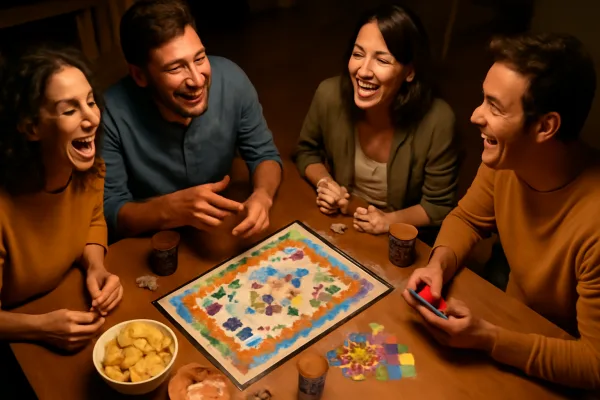
Game night can mean a lot of things. For some, it is a casual evening of Monopoly and pizza. For others, it is a carefully orchestrated event with themed decorations, signature cocktails, and a curated playlist of increasingly strategic board games. If you fall into the second camp, or want to, this guide is your blueprint for hosting game nights that your friends will actually remember and, more importantly, request again and again.
The secret to an unforgettable game night is not owning the most expensive board games or having the largest living room. According to a survey by the Game Manufacturers Association, the three factors that most influence whether guests rate a game night positively are the variety of games offered, the quality of food and drinks, and the host’s energy and organization. In other words, preparation and hosting skills matter far more than equipment.
This guide covers everything from selecting the right games for your group to managing the flow of the evening, feeding your guests without losing momentum, and handling the social dynamics that can make or break a game night. Whether you are hosting your first gathering or your fiftieth, these strategies will elevate your game night from good to legendary.
Planning Your Game Night: The Pre-Event Checklist
A successful game night begins days before anyone arrives. The amount of preparation you invest directly correlates with how smoothly the evening runs. Here is a comprehensive pre-event checklist that covers every detail:
Two weeks before:
- Choose a date and send invitations. For game nights, 6 to 10 guests is the sweet spot that allows for meaningful interaction without overcrowding.
- Ask about dietary restrictions, food preferences, and any games that guests particularly love or want to try.
- Decide on a theme (if any). Themed game nights, such as “Social Deduction Night,” “Classic Board Games,” or “Mystery and Murder,” provide focus and make game selection easier.
One week before:
- Select 4 to 6 games that match your guest count and the evening’s theme. Always have more games than you think you will need — it is better to have options than to run out of entertainment.
- Review the rules for any games you have not played recently. Nothing kills momentum faster than a host flipping through a rulebook for 15 minutes before the game can start.
- Plan your menu. Game night food should be easy to eat with one hand (finger foods, sliders, chips and dip) so players can snack without interrupting gameplay.
- Confirm RSVPs and finalize your guest count.
Day of the event:
- Set up the gaming area: clear enough table space for the largest game you plan to play, ensure adequate seating for everyone, and set up good lighting (board games require better lighting than movie nights).
- Prepare food and drinks in advance. Anything that can be set out before guests arrive should be.
- Stage your games in order of play, with the first game of the evening visibly ready to go when guests arrive.
- Test background music at a volume that creates atmosphere without competing with conversation.
| Guest Count | Ideal Game Types | Table Space Needed | Food Style |
|---|---|---|---|
| 4-5 | Strategy games, small social deduction, card games | One standard dining table | Shared appetizer platters |
| 6-8 | Party games, medium social deduction, cooperative games | One large table or two smaller tables | Buffet-style finger foods |
| 9-12 | Large group games, team games, multiple simultaneous games | Multiple gaming stations | Self-serve snack stations |
| 13+ | Werewolf, Blood on the Clocktower, tournament format | Open floor plan or multiple rooms | Potluck or catered |
The Perfect Game Night Flow: Timing is Everything
The biggest mistake amateur game night hosts make is not managing the flow of the evening. Without deliberate pacing, game nights can devolve into long stretches of one game that some guests love and others endure, or chaotic periods where no one can agree on what to play next. A well-structured flow keeps energy high and ensures everyone has a great time.
Here is a proven game night structure that works for most groups:
7:00-7:30 PM — Arrival and warm-up game. As guests arrive, have a simple, drop-in game ready that does not require all players to start simultaneously. Card games like Codenames, Wavelength, or Just One work perfectly because players can join mid-round. This warm-up period lets latecomers arrive without disrupting the main event.
7:30-8:30 PM — Main event game #1. This should be the evening’s centerpiece: the game that most guests came to play. For a social deduction night, this might be Blood on the Clocktower or Secret Hitler. For a mystery night, this might be Mysterium or Deception: Murder in Hong Kong. Introduce the rules clearly (keep explanations under 5 minutes if possible), and play one complete game. You might also enjoy our guide on murder mystery party guide.
8:30-9:00 PM — Food break and socializing. After the first major game, take a deliberate break for food and conversation. This break serves multiple purposes: it refuels everyone’s energy, it gives quieter guests a chance to socialize without the structure of a game, and it creates a natural reset point before the next gaming session. Serve the main food during this break.
9:00-10:00 PM — Main event game #2. The second major game can be a rematch of the first (common with social deduction games where players want to apply lessons learned) or a different game that offers a contrasting experience. If the first game was intense and strategic, choose something lighter and more social for the second round.
10:00-10:30 PM — Wind-down game. As the evening approaches its natural end, transition to a lighter, shorter game that does not require full concentration. Games like The Chameleon, Coup, Love Letter, or Skull work perfectly as wind-down games: they are quick, fun, and easy to stop at any point. This final phase lets the evening end naturally rather than abruptly.
10:30 PM+ — Open socializing. Leave the last portion of the evening unstructured. Some guests will want to play more games, while others will want to chat, and both options should be available. This flexibility respects your guests’ varied energy levels and social preferences.
“The mark of a great game night host is not the games they own — it is their ability to read the room and adjust the evening’s flow to match the energy and preferences of the people actually there.” — Rahdo, board game content creator
Choosing Games That Match Your Group
Game selection is the most important decision you make as a host, and the biggest mistake is choosing games that you love rather than games your guests will love. The best game night host is an empathetic curator who matches game complexity, theme, and interaction style to the specific people at the table.
Consider these factors when selecting games for your group:
Experience level. If your group includes people who rarely play board games, start with accessible, low-rule-count games: Codenames, Wavelength, Dixit, or One Night Ultimate Werewolf. If your group consists of experienced gamers, you can jump straight to complex games like Blood on the Clocktower, Betrayal at House on the Hill, or Spirit Island. Mixed experience groups benefit from games with simple rules but deep strategy, like The Resistance: Avalon or Decrypto.
Social dynamics. Not every group enjoys direct confrontation. If your guests include people who are sensitive to being accused, targeted, or eliminated, choose cooperative games (Mysterium, Pandemic, The Crew) or team-based games (Codenames, Wavelength) instead of competitive social deduction games. If your group thrives on conflict and trash talk, competitive games like Secret Hitler, Sheriff of Nottingham, or Cosmic Encounter will bring out their best.
Attention span. Be honest about how long your group can sustain focus on a single game. Some groups are happy to play a 2-hour epic like Blood on the Clocktower. Others start losing interest after 30 minutes. Plan your game selection around your group’s actual attention span, not your aspirational ideal. It is always better to end a game with everyone wanting more than to drag on with half the table checking their phones.
Game Night Food and Drinks That Actually Work
Game night food must satisfy two competing requirements: it should be delicious and interesting enough to feel like an event, but it should also be practical enough to eat alongside board games without creating a mess that damages components or disrupts play. For additional reading, visit BoardGameGeek.
The golden rules of game night food:
- One-hand food only. If a food item requires two hands to eat, it does not belong at game night. Finger foods, sliders, skewers, and dippable items keep one hand free for cards and dice.
- No greasy foods near game components. Chips are fine in a separate bowl. Fried chicken is not fine at the gaming table. Provide napkins and encourage hand-washing between eating and gaming.
- Serve drinks in lidded containers. A spilled beverage on a board game is a tragedy that can be prevented with travel mugs, bottles with caps, or cups with lids. This simple precaution protects hundreds of dollars worth of games.
- Prep everything in advance. You should not be in the kitchen during game time. Everything should be ready to grab and go before the first game starts.
Winning game night menus:
| Category | Options | Why It Works |
|---|---|---|
| Dippables | Hummus + pita chips, guacamole + tortilla chips, spinach artichoke dip + crackers | One-hand eating, easy to portion, crowd-pleasing |
| Finger sandwiches | Mini sliders, pinwheel wraps, caprese skewers, bruschetta | Substantial enough to replace dinner, mess-free |
| Snack mix | Popcorn, pretzels, trail mix, seasoned nuts | Non-perishable, self-serve, satisfying between games |
| Sweet treats | Brownies (pre-cut), cookies, donut holes, fruit skewers | Energy boost for late-evening gaming sessions |
| Drinks | Themed cocktails, craft sodas, sparkling water, tea/coffee | Variety ensures every guest has an option they enjoy |
For themed game nights, matching the food to the theme adds an extra layer of fun. A murder mystery game night pairs perfectly with “suspicious” cocktails and “evidence bag” snack portions. A pirate-themed game night calls for rum drinks and fish and chips. A medieval game night demands mead (or honey wine), meat pies, and bread with cheese. These thematic touches transform a snack table into part of the entertainment.
Managing Social Dynamics: The Host’s Secret Weapon
Every game night host eventually encounters social dynamics that threaten to derail the fun: the overly competitive player who takes losses personally, the alpha gamer who dominates every discussion, the shy guest who retreats into their phone, or the sore loser who ruins the mood. Managing these dynamics gracefully is what separates great hosts from merely good ones.
The alpha gamer: Some players naturally dominate discussions and try to make decisions for the group. In cooperative games, this can be particularly problematic. Solutions include choosing games where simultaneous play prevents quarterbacking (like Magic Maze or The Crew), setting a timer for individual turns, or gently redirecting: “That is a great idea, Alex. Let us hear what Sarah thinks before we decide.”
The quiet player: Some guests are naturally reserved or feel intimidated by more experienced players. Include them deliberately by asking for their input during discussions, choosing games that give every player a defined role, and partnering them with a supportive experienced player for their first game. Often, quiet players become the most engaged once they feel comfortable.
The sore loser/winner: If a guest takes losses too personally or gloats excessively after winning, the best intervention is tonal. Celebrate clever plays regardless of which team benefited. Emphasize the fun of the experience over the outcome. And choose games where luck plays a significant role alongside skill, so that losses can be attributed to bad luck rather than personal failure.
The phone zombie: Guests who retreat into their phones are usually either bored or uncomfortable. Address the root cause: if they are bored, the current game may not be the right fit — suggest a switch. If they are uncomfortable, make a deliberate effort to include them. A blanket “no phones at the table” rule can work for some groups but may feel authoritarian. A better approach is to make the games so engaging that phones become irrelevant. For more on this topic, check out our article about party themes.
Building a Game Night Tradition
The greatest game nights are not one-off events. They are recurring traditions that your social circle looks forward to and builds their schedules around. Here is how to turn a single successful game night into a lasting tradition:
Establish a regular cadence. Monthly game nights are the most sustainable frequency for most groups. Weekly can lead to burnout, while quarterly does not build enough momentum. Choose a consistent time slot (first Saturday of the month, for example) that becomes predictable and easy to plan around.
Rotate hosting duties. Sharing hosting responsibilities prevents burnout and introduces variety. Each host brings their own style, game preferences, and food specialties. Create a simple rotation schedule and provide a basic hosting guide so that everyone can deliver a consistent quality experience.
Track your game history. Keep a running log of which games were played, who won, and notable moments from each session. This log serves multiple purposes: it prevents you from repeating games too frequently, it creates a shared history that strengthens group bonds, and it provides entertaining material for reminiscing at future game nights. A shared Google Sheet or a dedicated group chat thread works well for this purpose.
Introduce new games gradually. Every session should include at least one familiar game that the group already enjoys and at most one new game that introduces fresh challenge. This balance provides comfort and novelty in equal measure. New games should be introduced with clear, concise rules explanations, and the host should have played a practice round before teaching the group.
Celebrate milestones. Mark your group’s game night milestones: the 10th session, the one-year anniversary, the first time a player wins three games in one night. These celebrations reinforce the tradition and create shared memories that give the group its identity.
Essential Games Every Game Night Host Should Own
Building a versatile game collection does not require spending thousands of dollars. A curated collection of 8 to 12 games, selected to cover different player counts, complexity levels, and gaming moods, provides everything you need for years of excellent game nights.
The essential starter collection (under $150 total): Learn more at party games.
- Quick filler (under 15 min): Coup ($10) or Love Letter ($12)
- Party game (6+ players): Codenames ($15) or Wavelength ($30)
- Social deduction: One Night Ultimate Werewolf ($20) or The Resistance: Avalon ($18)
- Cooperative: The Crew ($12) or Pandemic ($30)
- Strategy (medium weight): Catan ($35) or Ticket to Ride ($35)
- Deep social deduction: Secret Hitler ($30) or Deception: Murder in Hong Kong ($30)
This six-game collection covers every scenario you are likely to encounter: quick warm-up games, large group games, intense strategic games, and cooperative experiences. Each game has been chosen for its broad appeal, high replay value, and reasonable price point. As your group’s preferences become clearer, you can expand the collection in the directions that generate the most enthusiasm.
Conclusion
Hosting an unforgettable game night is equal parts preparation, curation, and social awareness. The strategies in this guide, from pre-event planning and game selection to evening flow management and social dynamics, provide a framework for creating experiences that your friends will genuinely treasure. The best game nights do not happen by accident. They are crafted by hosts who understand that the games are just the medium; the real goal is creating an evening of connection, laughter, and shared adventure.
Start with one game night. Apply the strategies in this guide. Pay attention to what works and what does not for your specific group. Then do it again. And again. Before long, your game nights will be the most requested social events in your circle, and you will wonder how you ever hosted a gathering without a stack of board games at the ready.
Found this helpful? Share it with your game night crew.
Frequently Asked Questions
How do I convince non-gamers to attend a game night?
Frame it as a social event with games, not a gaming event with socializing. Emphasize the food, drinks, and company rather than the games themselves. Start with accessible, non-intimidating games that non-gamers will recognize or that require no prior experience. Once they experience the fun firsthand, most non-gamers become enthusiastic regulars.
What do I do if not everyone arrives at the same time?
Have a simple warm-up game running that accommodates flexible player counts and does not require starting from the beginning. Card games like Sushi Go, Love Letter, or Exploding Kittens work perfectly. Start the main event game only when most guests have arrived.
How do I handle guests who want to play different games?
If your group is large enough (8+ players), consider setting up two gaming stations with different games running simultaneously. Players can choose which game interests them, and groups can swap between stations between rounds. For smaller groups, let the majority choose the next game, and promise the minority that their preference will be next.
Should I serve alcohol at game night?
Alcohol is welcome at most adult game nights but should be managed thoughtfully. Provide non-alcoholic options alongside alcoholic ones. Avoid drinking games that encourage excessive consumption. For strategy-heavy games, remind guests that complex decision-making suffers after several drinks. For social deduction games, moderate drinking can actually enhance the social experience by lowering inhibitions. We also have a great resource on Blood on the Clocktower that you might find helpful.
What is the ideal length for a game night?
3 to 4 hours is the sweet spot for most adult game nights (typically 7 PM to 10-11 PM). Shorter events feel rushed, while longer events lead to fatigue. Always have a clear ending time communicated in advance so guests can plan transportation and childcare. The best game nights end with guests wanting more, not looking at the clock.
Virtual Game Night: Keeping the Tradition Alive Online
Sometimes distance, weather, or scheduling conflicts make in-person game nights impossible. Virtual game nights have become a permanent fixture in the gaming landscape, offering a way to maintain your game night tradition when gathering in person is not feasible. The key to a successful virtual game night is choosing games and platforms that translate well to the online format.
Best platforms for virtual game nights:
Board Game Arena (boardgamearena.com) is the gold standard for online board gaming. It hosts over 700 board games with polished digital implementations, including many social deduction games like The Resistance, Saboteur, and Coup. Most games are free to play, with a premium subscription offering additional features and games. The platform handles all rules enforcement automatically, so players can focus on strategy and social interaction.
Tabletop Simulator on Steam provides a virtual tabletop where you can play virtually any board game using user-created modules. The flexibility is unmatched, but the interface has a steeper learning curve than dedicated platforms. Best for groups who want to play specific games that are not available on Board Game Arena.
For social deduction specifically, dedicated platforms offer the best experience: clocktower.online for Blood on the Clocktower, secrethitler.io for Secret Hitler, and the Among Us app for mobile and PC play. These purpose-built platforms provide the smoothest experience for their respective games.
Tips for engaging virtual game nights: Use video chat alongside the game platform so players can see each other’s reactions. Keep sessions shorter than in-person events, as screen fatigue sets in after about 2 hours. Take breaks between games for casual conversation. And choose games that rely heavily on discussion and social interaction, since these elements translate best to the virtual format. Pure strategy games with minimal player interaction often feel flat online.