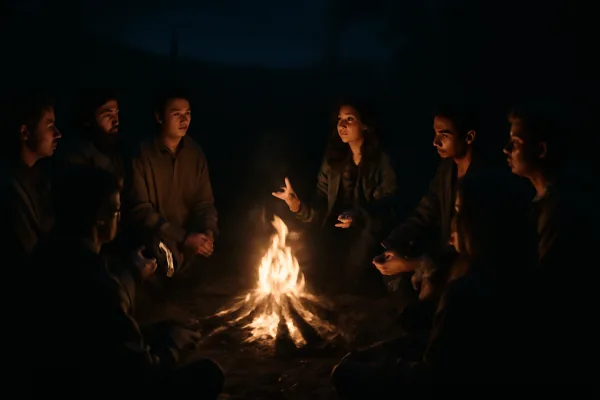
The Werewolf game, also known as Mafia in its original form, is the grandfather of all social deduction party games. Before Among Us brought hidden role games to the mainstream, before Secret Hitler added political intrigue, and before Blood on the Clocktower reimagined the genre entirely, there was Werewolf: a simple, elegant game of accusations, deception, and mob justice that has been entertaining groups of friends for over three decades. If you are looking for a party game that requires no equipment, works with almost any group size, and creates unforgettable moments of drama and laughter, Werewolf deserves your attention.
The game was originally created by Dmitry Davidoff in 1986 at Moscow State University under the name “Mafia.” It spread organically through university campuses and social circles before being commercially published in various forms, most notably as “Ultimate Werewolf” by Bezier Games and “The Werewolves of Millers Hollow” by Asmodee. Today, werewolf game variants have been played by an estimated 200 million people worldwide, making it one of the most widely played party games in history according to BoardGameGeek’s tracking data.
This guide covers everything you need to run a perfect Werewolf game night, from the basic rules that every player needs to know, through the complete role roster and their strategic implications, to advanced moderating techniques that will make you the most popular game host in your social circle.
The Basic Rules: How Werewolf Works
Werewolf is a game of two phases, Day and Night, played in a group of 7 to 30 or more players. At the beginning of the game, each player is secretly assigned a role: either a Villager (good team) or a Werewolf (evil team). A Moderator, who does not play but facilitates the game, manages the transitions between phases and the actions that occur during the Night.
Night Phase: All players close their eyes. The Moderator instructs the Werewolves to open their eyes and silently agree on one Villager to “kill.” The Werewolves close their eyes. If special roles are in play (Seer, Doctor, etc.), the Moderator then wakes each special role individually to perform their ability. Once all Night actions are resolved, the Moderator announces that it is morning.
Day Phase: All players open their eyes. The Moderator announces which player was killed during the Night (that player is eliminated and can no longer participate). The surviving players then discuss, debate, and accuse each other of being Werewolves. After a set discussion period, players nominate suspects and vote on who to “lynch” (eliminate). The player who receives the most votes is eliminated. The Moderator does not reveal eliminated players’ roles until the end of the game (in most variants).
Win Conditions:
- Villagers win when all Werewolves have been eliminated
- Werewolves win when the number of Werewolves equals or exceeds the number of Villagers
| Player Count | Werewolves | Villagers | Special Roles (Recommended) | Game Length |
|---|---|---|---|---|
| 7-8 | 2 | 5-6 | Seer + Doctor | 15-25 minutes |
| 9-11 | 2-3 | 6-8 | Seer + Doctor + Hunter | 20-35 minutes |
| 12-15 | 3-4 | 8-11 | Seer + Doctor + Hunter + Witch + Bodyguard | 25-45 minutes |
| 16-20 | 4-5 | 11-15 | Full role set recommended | 30-60 minutes |
| 21-30+ | 5-7 | 15-23+ | Full role set + custom roles | 45-90 minutes |
Essential Roles Every Player Should Know
While the basic Villager and Werewolf roles are the foundation of the game, special roles add layers of strategy, information, and drama that transform Werewolf from a simple guessing game into a rich social experience. Here are the most commonly used roles and their strategic significance:
The Seer (also called Fortune Teller or Oracle): Each Night, the Seer points to one player, and the Moderator indicates whether that player is a Werewolf or a Villager. The Seer is the most powerful information role in the game and is therefore the primary target for Werewolf elimination. The strategic tension for the Seer is timing: reveal your identity too early and the Werewolves will kill you tonight; reveal too late and your information dies with you if you are eliminated before sharing it.
The Doctor (also called Medic or Healer): Each Night, the Doctor chooses one player to protect. If the Werewolves target that player, the player survives. The Doctor cannot protect the same player on consecutive nights (in most variants). The Doctor’s strategic challenge is reading the game: protecting the Seer is obvious if the Seer has been revealed, but if the Seer is still hidden, the Doctor must guess who the Werewolves are likely to target. You might also enjoy our guide on One Night Ultimate Werewolf.
The Hunter (also called Vigilante): When the Hunter is eliminated (by Werewolves or by village vote), they immediately “shoot” and eliminate another player of their choice. This ability creates a powerful deterrent against eliminating the Hunter and can swing the game in either direction depending on who the Hunter targets.
The Witch: The Witch has two potions, one that saves a player from death and one that kills a player, each usable once per game. Each Night, the Moderator shows the Witch who the Werewolves have targeted, and the Witch can choose to use their healing potion to save that player or their killing potion to eliminate a different player. The Witch adds a dramatic element of power and responsibility to the game.
The Cupid: On the first Night, Cupid selects two players to become “Lovers.” If either Lover is eliminated, the other dies of a broken heart. If one Lover is a Villager and the other is a Werewolf, they become a third faction that wins only if they are the last two players alive. The Cupid role introduces romance, tragedy, and unpredictable alliances that can completely upend the standard Villager vs. Werewolf dynamic.
The Tanner (also called Fool): The Tanner is a wild card who wins the game only if they are eliminated by the village vote (not by Werewolves). The Tanner therefore acts as suspiciously as possible, trying to draw accusations and votes. This role is excellent for experienced groups because it forces players to consider that the most suspicious person might not be a Werewolf at all.
“Werewolf is the purest form of social deduction gaming. No cards to hide behind, no mechanics to blame — just people looking into each other’s eyes and deciding who to trust. That simplicity is its greatest strength.” — Wil Wheaton, TableTop
How to Be an Amazing Werewolf Moderator
The Moderator is the heartbeat of a Werewolf game. A great Moderator transforms a casual card game into an immersive theatrical experience. A poor Moderator can make even the best group of players feel bored or confused. Here are the techniques that separate good Moderators from legendary ones:
Set the atmosphere with your voice. During the Night phase, speak in a low, dramatic voice. “The village sleeps… but not all is peaceful. Werewolves, open your eyes. Choose your victim.” During the Day phase, announce deaths with theatrical gravity. “As dawn breaks over the village, the townspeople gather in the square to discover a terrible sight. Sarah was found in her home, the victim of the Werewolves’ hunger.” This narrative framing transforms game mechanics into storytelling.
Manage the discussion timer firmly but flexibly. Set a discussion time for the Day phase (5 to 10 minutes is typical) and stick to it. Enforce it with gentle warnings: “Two minutes remaining,” “One minute — make your final arguments,” “Time. Let us vote.” However, if the group is engaged in a particularly dramatic moment or a pivotal confrontation, let it breathe for an extra minute. The Moderator’s job is to keep the game moving, not to rush the best moments.
Keep Night phases brisk and consistent. One of the biggest mood killers in Werewolf is a slow Night phase. Practice your Night script so you can move through each role quickly and smoothly. Always wake the Werewolves first, then special roles in a consistent order. Use a “cover noise” system where you lightly tap the table throughout the Night phase so that players cannot identify who is being woken by the sound of movement.
Never reveal information prematurely. The single most important rule for Moderators is to never reveal a player’s role when they are eliminated. Simply say “Player X has been eliminated. They may no longer speak or participate.” Reveal all roles only at the end of the game. This keeps the mystery alive and prevents the dead from spoiling the game for the living. For additional reading, visit Mafia party game.
Werewolf Strategy for Villagers
Playing as a Villager (or a Villager-aligned special role) requires a combination of observation, logic, and social intelligence. The fundamental challenge for Villagers is information asymmetry: the Werewolves know who each other are, but the Villagers are operating in the dark. Here are strategies that experienced Villager players use to overcome this disadvantage:
Watch behavioral patterns, not just words. What people say during the Day phase is important, but how they say it is often more revealing. Watch for changes in behavior between rounds. A player who was quiet in Round 1 but suddenly becomes vocal and accusatory in Round 2 may be a Werewolf trying to deflect suspicion. A player who makes eye contact with certain people during discussions may be unconsciously revealing an alliance.
Track voting patterns meticulously. Who votes for whom, and how quickly they commit to their vote, reveals alignments. Werewolves often hesitate to vote for their fellow Werewolves, instead targeting confirmed or suspected Villagers. If you notice that two or three players consistently avoid voting for each other while actively voting against others, they may be on the same team.
Use the process of elimination. As the game progresses and players are eliminated, the information landscape narrows. Keep a mental or physical list of eliminated players and what was known or suspected about each. Cross-reference this with the behavior of surviving players. If a player who was defending an eliminated Werewolf suddenly changes their alignment, they may also be a Werewolf who realizes they need to distance themselves.
Share information strategically. If you are the Seer, revealing your identity gives the village powerful information but makes you the Werewolves’ primary target. The optimal timing depends on the game state. If you have identified a Werewolf, share your information before you are killed. If you have not yet found a Werewolf, staying hidden may allow you to gather more information. As a general rule, the Seer should reveal their identity if they are nominated for elimination (to save themselves) or if they have confirmed a Werewolf (to eliminate them).
Werewolf Strategy for Werewolves
Playing as a Werewolf is the most exhilarating role in the game. You have perfect information about your team, you get to plan coordinated strategies with your fellow Werewolves during the Night phase, and you experience the thrill of deceiving your friends while watching the village tear itself apart with false accusations.
Blend in, do not stand out. The most successful Werewolf strategy is to be unremarkable. Participate in discussions at a moderate level: not too quiet (which attracts suspicion in experienced groups) and not too vocal (which can appear overcompensating). Agree with the group consensus when it is not threatening a Werewolf, and gently redirect when the village is getting too close to the truth. For more on this topic, check out our article about Blood on the Clocktower.
Sacrifice strategically. Sometimes the best move for the Werewolf team is to sacrifice one of their own. If a Werewolf is under heavy suspicion and the village is about to vote them out, the other Werewolves should not defend them too vigorously. Instead, let the elimination happen and use it to build credibility. “I voted for the Werewolf! See, you can trust me.” This is called “bussing” in the social deduction community and is a hallmark of advanced Werewolf play.
Target information roles first. During the Night phase, prioritize killing the Seer, Doctor, and other information-gathering roles. If the Seer has been identified (even if they have not publicly claimed the role), eliminating them prevents them from gathering more information and potentially identifying the remaining Werewolves. If the Doctor is suspected, killing the Doctor removes the protection that keeps key Villagers alive.
Create confusion during the Day. Plant seeds of doubt about confirmed Villagers. Suggest alternative explanations for evidence. Accuse other Villagers who you know are innocent. Create scenarios where two Villagers are suspicious of each other. The more chaos and distrust you generate among the Villagers, the harder it is for them to organize a coherent strategy against the Werewolf team.
Werewolf Variants for Different Group Sizes and Preferences
One of Werewolf’s greatest strengths is its adaptability. The basic game can be modified to suit different group sizes, experience levels, and preferences. Here are some of the most popular variants:
| Variant | Players | Key Difference | Best For |
|---|---|---|---|
| One Night Ultimate Werewolf | 3-10 | Single Night/Day cycle; no elimination; bluffing-focused | Quick games, small groups, casual players |
| Werewolves of Millers Hollow | 8-18 | Classic Werewolf with additional roles and expansions | Traditional Werewolf experience |
| Ultimate Werewolf | 5-75 | Massive role library, designed for large groups | Conventions, parties, large groups |
| Daybreak (expansion) | 3-7 | New roles for One Night; adds complexity to small games | Experienced One Night players |
| Werewords | 4-10 | Combines Werewolf with a word-guessing game | Mixed groups, word game fans |
| Werewolf Legacy | Special | Campaign mode with permanent changes across sessions | Dedicated groups who play regularly |
One Night Ultimate Werewolf deserves special mention as the most popular Werewolf variant for small groups and casual play. Unlike traditional Werewolf, which plays over many rounds, One Night consists of a single Night phase followed by a single Day discussion and vote. Players receive roles, perform Night actions, and then have just 5 to 10 minutes of discussion before voting. The compressed format eliminates player elimination (everyone plays the entire game) and creates an incredibly tense, fast-paced experience.
The One Night format also introduces role-switching mechanics that add a unique layer of chaos. The Troublemaker swaps two players’ roles without telling them. The Robber steals another player’s role. The Drunk unknowingly exchanges their role with a card in the center. This means that players may not even know their own role by the time the Day phase begins, creating hilarious confusion and innovative deduction challenges.
Running a Werewolf Tournament
If your regular game group has become deeply invested in Werewolf, organizing a tournament can be a spectacular way to elevate the experience. Werewolf tournaments have become popular at gaming conventions and social events around the world, with some competitions attracting hundreds of participants.
A basic Werewolf tournament structure works as follows: divide players into tables of 10 to 15 players. Each table plays 2 to 3 games with different role assignments. Points are awarded based on team victory and individual performance (such as correctly identifying a Werewolf or surviving as the Seer). After the preliminary rounds, the top-scoring players from each table advance to a championship round where the best players compete in a single high-stakes game. Learn more at Werewolf on BoardGameGeek.
Scoring systems vary, but a common approach awards 2 points for each game won by your team, 1 bonus point for being the player who nominated the final Werewolf, and 1 bonus point for surviving until the end of the game as a special role. Werewolves earn bonus points for each successful Night kill. This scoring system rewards both team play and individual skill, creating a competitive environment that brings out the best in experienced players.
Conclusion
Werewolf is the foundation upon which the entire social deduction genre is built, and it remains one of the most accessible, versatile, and entertaining party games available. Its requirement of zero equipment (just people and a Moderator), infinite scalability (from 7 to 30+ players), and universal appeal (no gaming experience needed) make it the perfect game for virtually any social occasion.
Whether you are running your first game with a group of newcomers or organizing a tournament for experienced players, the strategies and techniques in this guide will help you create memorable game nights filled with accusations, revelations, and the incomparable thrill of discovering who among your friends has been the Werewolf all along.
Found this helpful? Share it with your game night crew.
Frequently Asked Questions
What is the minimum number of players for Werewolf?
Traditional Werewolf requires a minimum of 7 players (5 Villagers + 2 Werewolves) plus a Moderator. One Night Ultimate Werewolf, a variant designed for smaller groups, works with as few as 3 players. For the best experience with traditional Werewolf, aim for 10 to 15 players.
Can you play Werewolf without a Moderator?
Several Werewolf variants eliminate the need for a Moderator. One Night Ultimate Werewolf uses a free companion app that narrates the Night phase. Some digital implementations on mobile apps and websites also run the game without a human Moderator. However, a skilled human Moderator adds atmosphere and drama that digital alternatives cannot fully replicate.
How do you handle the problem of eliminated players being bored?
Player elimination is Werewolf’s most commonly cited weakness. Solutions include keeping games short (15 to 25 minutes), playing multiple games in an evening so eliminated players rejoin quickly, switching to One Night Ultimate Werewolf which has no elimination, or giving eliminated players a “ghost” role where they can observe and take notes for post-game discussion. We also have a great resource on murder mystery party that you might find helpful.
Is Werewolf better played with or without special roles?
For new players, start with just Villagers and Werewolves for the first game to learn the basic mechanics. For the second game, add the Seer and Doctor. Add more special roles as the group becomes comfortable. Experienced groups generally prefer games with 3 to 5 special roles, which add information and strategic depth without making the game overly complex.
What is the difference between Werewolf and Mafia?
Werewolf and Mafia are essentially the same game with different themes. Mafia uses a crime family theme (Mafia vs. Townspeople) while Werewolf uses a horror theme (Werewolves vs. Villagers). The core mechanics, hidden roles, Night kills, Day discussion, and elimination voting are identical. Commercially published versions may add unique roles or rules, but the fundamental gameplay is the same.
Essential Equipment and Setup for Your First Game
One of Werewolf’s greatest advantages is its minimal equipment requirement. You can run a perfectly good game with nothing more than a deck of regular playing cards and a group of willing friends. However, a small investment in purpose-built materials can significantly enhance the experience.
DIY setup with regular playing cards: Assign card values to roles before the game. For example: Ace of Spades = Werewolf, King of Hearts = Seer, Queen of Hearts = Doctor, all other cards = Villager. Deal one card face-down to each player. This works perfectly and costs nothing if you already have a deck of cards.
Commercial Werewolf sets: Published versions like Ultimate Werewolf by Bezier Games (approximately fifteen to twenty dollars) and The Werewolves of Millers Hollow by Asmodee (approximately twelve to eighteen dollars) include beautifully illustrated role cards, reference guides, and rules for dozens of special roles. These sets are worth the investment if you plan to play regularly because the illustrated cards add thematic atmosphere and make role distribution smoother.
Atmosphere enhancers: While not required, a few simple additions can dramatically improve the game experience. A battery-operated candle or dim lamp creates the right mood for the storytelling portions. Background music, such as a dark ambient or forest sounds playlist on Spotify, adds immersion during the Night phase. A timer app on your phone helps manage discussion periods consistently. And if you are playing with a large group, a small bell or gavel for the Moderator to signal transitions between phases keeps the game organized and professional.
Seating arrangement: Arrange players in a circle so everyone can see each other during the Day phase discussions. This configuration also makes it easier for the Moderator to move around the outside of the circle during the Night phase, tapping players on the shoulder to wake them for their Night actions. If space is limited, a semicircle facing the Moderator also works well.