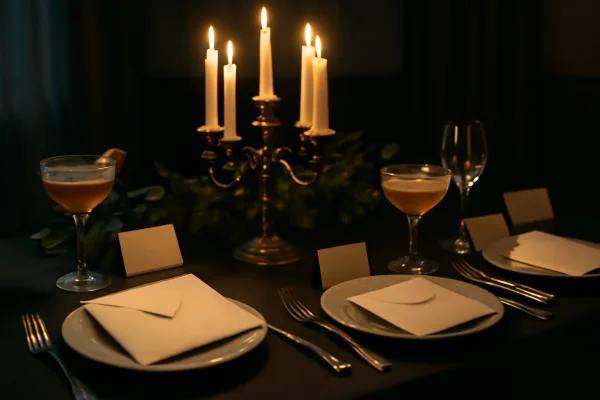
Murder mystery dinner parties combine two of life’s greatest pleasures: an excellent meal and an irresistible puzzle. But the food at a murder mystery dinner is not just fuel for the investigation — it is part of the experience, a theatrical element that immerses your guests in the world of the mystery and creates sensory memories that last far longer than the evening itself. The right menu transforms a good mystery party into an unforgettable event, while the wrong food choices can break immersion, create logistical nightmares, and leave guests more focused on their empty stomachs than on solving the crime.
According to a survey by entertainment event platform Peerspace, 78% of murder mystery party guests cited the food as one of the three most memorable elements of the evening, alongside the mystery reveal and the costumes. Yet food planning is consistently the aspect that hosts find most stressful, particularly when trying to balance themed presentation with practical considerations like dietary restrictions, preparation time, and the need to actually host the mystery rather than spending the entire evening in the kitchen.
This guide solves that problem with 7 complete themed menus designed specifically for murder mystery dinner parties. Each menu includes appetizers, a main course, dessert, and drink pairings, along with preparation timelines, dietary modification suggestions, and presentation tips that maximize visual impact with minimal effort. Whether your mystery is set in a 1920s speakeasy, a Victorian manor, or a tropical island, there is a menu here that will make your evening delicious and memorable.
The Golden Rules of Murder Mystery Dinner Food
Before diving into specific menus, every murder mystery host should understand five principles that apply regardless of theme:
Rule 1: Finger food is your friend. During active mystery rounds, guests need to eat with one hand while holding clue cards, character sheets, and drinks with the other. Appetizers and snacks should be designed for one-handed eating: skewers, sliders, bruschetta, stuffed mushrooms, and dippable items. Save knife-and-fork dishes for the dedicated dinner break between rounds.
Rule 2: Prepare everything in advance. You cannot host a mystery and cook simultaneously. Every dish should be either fully prepared before guests arrive or require nothing more than popping something in the oven at a predetermined time. The host needs to be present and engaged during the mystery, not trapped in the kitchen.
Rule 3: Match the menu to the mystery flow. Structure your food service around the mystery’s rounds. Appetizers during the introduction and first round. Main course during the middle break. Dessert after the reveal. This natural pairing creates a rhythm that enhances both the dining and mystery experiences.
Rule 4: Account for dietary needs proactively. Ask about dietary restrictions when you send invitations, not the day before the party. Every menu should include at least one vegetarian option and one gluten-free option. Label dishes with common allergens. A guest who cannot eat anything at the party will have a terrible time regardless of how brilliant the mystery is.
Rule 5: Presentation over perfection. Murder mystery dinner food does not need to be restaurant quality. It needs to look thematic and be served with confidence. A simple cheese board on a wooden cutting board with scattered rosemary sprigs looks more impressive than a complicated dish served on a plain plate. Invest your effort in presentation, not complexity.
| Serving Moment | Food Type | Ideal Characteristics | Mystery Round |
|---|---|---|---|
| Guest arrival (pre-mystery) | Light appetizers + welcome drink | One-handed, room temperature, self-serve | Mingling and character introduction |
| Round 1-2 | Grazing snacks | Low mess, refillable, non-distracting | Active investigation |
| Mid-mystery break | Main course | Plated or buffet, can use utensils | Dedicated eating/socializing break |
| Round 3-4 | Light snacks | Minimal, as mystery intensifies | Final investigation rounds |
| Post-reveal | Dessert + celebration drinks | Indulgent, shareable, photogenic | Reveal discussion and socializing |
Menu 1: The 1920s Speakeasy — Prohibition Glamour
The 1920s Speakeasy menu captures the elegance and excess of the Jazz Age with dishes that feel both sophisticated and approachable. This menu works particularly well because many of the dishes can be prepared the day before and simply plated before guests arrive.
Welcome drink: French 75 (gin, champagne, lemon juice, simple syrup) served in champagne coupes. Non-alcoholic version: sparkling elderflower lemonade.
Appetizers (serve during arrival and Round 1): You might also enjoy our guide on hosting your first murder mystery.
- Classic deviled eggs with smoked paprika (make the day before; assemble 1 hour before guests arrive)
- Shrimp cocktail with horseradish cocktail sauce (prep shrimp morning of; sauce made days ahead)
- Stuffed mushrooms with herbed cream cheese and breadcrumbs (assemble morning of; bake 20 minutes before serving)
- Cheese and charcuterie board with fig jam, honeycomb, and assorted crackers
Main course (serve during mid-mystery break):
- Chicken piccata with lemon-caper sauce (prep chicken cutlets ahead; cook sauce 30 minutes before serving)
- Roasted asparagus with lemon zest
- Garlic mashed potatoes (make ahead and reheat)
- Vegetarian option: mushroom risotto (prep stock ahead; finish 20 minutes before serving)
Dessert (serve after the reveal):
- Mini chocolate eclairs (purchase from bakery or make ahead and freeze)
- Fruit tart with pastry cream (assemble morning of)
Cocktail menu throughout the evening: Old Fashioned, Sidecar, Bee’s Knees, Gin Rickey. Non-alcoholic: ginger beer, Arnold Palmer, sparkling grape juice in champagne flutes.
Preparation timeline: This menu requires approximately 3 to 4 hours of total preparation time, with most work done the morning of the event. The main course requires 30 minutes of active cooking during the mid-mystery break, which can be handled quickly if ingredients are prepped in advance.
Menu 2: Victorian Sherlock Holmes — English Manor Elegance
A Victorian-themed menu evokes the world of Sherlock Holmes and Agatha Christie with refined English dishes that are simpler to prepare than they appear. The key to this menu’s success is the tea service element, which creates a uniquely atmospheric dining experience.
Welcome drink: Mulled wine (prepare in a slow cooker 2 hours before guests arrive; the aroma fills the entire space and doubles as atmosphere). Non-alcoholic: hot apple cider with cinnamon sticks.
Appetizers:
- Tea sandwiches: cucumber with cream cheese, smoked salmon with dill, egg salad with watercress (make 2 to 3 hours ahead; cover with damp paper towel to keep fresh)
- Mini scones with clotted cream and strawberry jam (bake morning of or purchase from a bakery)
- Cheese board featuring English cheeses: Stilton, aged Cheddar, Wensleydale with cranberries
Main course:
- Individual beef Wellington bites (prepare and freeze up to a week ahead; bake 25 minutes before serving)
- Roasted root vegetables with rosemary and thyme
- Yorkshire pudding (make batter ahead; bake during the break)
- Vegetarian option: mushroom and leek pie
Dessert:
- Trifle with layers of sponge cake, custard, berry compote, and whipped cream (assemble the morning of; refrigerate)
- Shortbread cookies (bake days ahead; store in tins)
“The best themed dinner parties do not just serve food — they serve an experience. When your guests bite into a tea sandwich while discussing who murdered the Duke, the food becomes part of the story.” — Epicurious, themed dinner party guide
Menu 3: Tropical Island — Paradise on a Plate
The tropical island menu is the easiest on this list to prepare, the most forgiving of imperfection, and the most naturally fun. Almost everything can be served at room temperature, the flavors are universally appealing, and the presentation practically handles itself with some colorful serving dishes and tropical garnishes. For additional reading, visit dinner party traditions.
Welcome drink: Mai Tai or Piña Colada (batch-prepare and keep in a pitcher). Non-alcoholic: tropical fruit punch with pineapple juice, orange juice, and grenadine.
Appetizers:
- Coconut shrimp with sweet chili dipping sauce (purchase frozen and bake; sauce from jar or homemade)
- Pineapple and ham skewers (assemble morning of)
- Tropical fruit platter: mango, pineapple, papaya, kiwi, star fruit
- Guacamole and plantain chips
Main course:
- Fish tacos with mango salsa and lime crema (prep toppings ahead; cook fish 15 minutes before serving)
- Jerk chicken drumsticks (marinate overnight; bake 45 minutes before serving)
- Coconut rice (cook in rice cooker during the party)
- Vegetarian option: grilled vegetable and black bean tacos
Dessert:
- Key lime pie (make the day before; the flavors improve overnight)
- Chocolate-dipped frozen banana pops (make day before; keep in freezer)
Menu 4: Halloween Gothic Horror — Spooky and Spectacular
The Halloween Gothic Horror menu is where food presentation becomes a genuine art form. The dishes themselves are straightforward, but the spooky presentation transforms ordinary food into theatrical set pieces that guests will photograph and share on social media. This menu is the most visually impressive of the seven and generates the most conversation.
Welcome drink: “Witch’s Brew” punch: grape juice, lemon-lime soda, and lime sherbet in a cauldron-style bowl with dry ice fog. Non-alcoholic and dramatic. Alcoholic version: add vodka.
Appetizers:
- Mummy hot dogs: wrap puff pastry strips around cocktail franks, leaving a gap for the “eyes” (dots of mustard)
- Spider web dip: black bean dip with sour cream piped in a web pattern on top, served with tortilla chips
- “Bloody” bruschetta: classic bruschetta presented on a dark slate board with extra tomato sauce dripping over the edges
- Cheese and crackers presented on a skeleton hand serving tray (available at Halloween stores)
Main course: For more on this topic, check out our article about decorations on a budget.
- “Graveyard” shepherd’s pie: topped with mashed potato “tombstones” (shaped with a cookie cutter) and parsley “grass”
- “Poison” pumpkin soup served in hollowed-out mini pumpkins or gourds
- Vegetarian option: black bean and sweet potato chili with “eyeball” mozzarella balls floating on top
Dessert:
- Graveyard cake: chocolate cake with crushed Oreo “dirt,” gummy worms, and cookie “tombstones” with RIP piped in icing
- Candy apple slices with caramel and chocolate drizzle
Menus 5-7: Quick Reference
| Theme | Key Dishes | Signature Drink | Difficulty | Prep Time |
|---|---|---|---|---|
| 5. Wild West Saloon | BBQ sliders, cornbread muffins, baked beans, pulled pork | Whiskey sour, root beer floats | Easy | 2-3 hours (slow cooker does most of the work) |
| 6. Casino Royale / Spy | Smoked salmon canapés, steak bites, truffle fries, chocolate martini truffles | Vodka martini (“shaken, not stirred”), sparkling water with lime | Medium | 3-4 hours |
| 7. 1980s Retro | Mini pizza bagels, pigs in blankets, Jell-O shots/cups, Rice Krispie treats | Neon cocktails (Blue Lagoon, Tequila Sunrise), Tab/RC cola | Very Easy | 1-2 hours (mostly nostalgia, not complexity) |
The Wild West menu is ideal for outdoor events and casual groups, with slow-cooker pulled pork doing most of the heavy lifting. The Casino Royale menu brings sophistication for upscale events, with the martini service becoming a centerpiece of the evening. The 1980s Retro menu is pure fun, leveraging nostalgic foods that are intentionally simple and unrefined, which is exactly what makes them charming.
Dietary Accommodations That Do Not Compromise the Theme
Modern dinner parties must accommodate an increasingly diverse range of dietary needs. The good news is that themed food can be adapted for most dietary restrictions without sacrificing presentation or thematic coherence.
Vegetarian/Vegan: Every menu above includes a vegetarian main course option. For vegans, substitute dairy-free cheeses on cheese boards, use coconut cream in place of dairy cream, and ensure that appetizers include plant-based options. Themed presentation matters more than specific ingredients, so a beautifully presented vegan mushroom Wellington is just as atmospheric as a beef version.
Gluten-free: Replace crackers with rice crackers or gluten-free alternatives on cheese boards. Serve main courses with rice or potato-based sides instead of bread. Many appetizers (shrimp cocktail, fruit skewers, stuffed mushrooms) are naturally gluten-free. Label all dishes clearly so guests can make informed choices.
Common allergens: When invitations go out, include a dietary restriction question. Maintain a master list of restrictions and cross-reference it with your menu. For nut allergies, avoid nut-based garnishes and check all packaged ingredients for nut traces. For shellfish allergies, offer a non-seafood appetizer alternative. Simple awareness and clear labeling prevent most dietary issues.
Budget-Friendly Themed Menus
Themed food does not require a large budget. The most impactful elements of a murder mystery dinner are presentation and atmosphere, not expensive ingredients. Here is how to create impressive themed menus at three budget levels:
| Budget | Cost Per Guest | Strategy | Sample Menu |
|---|---|---|---|
| Minimal ($5-8/guest) | $40-64 for 8 guests | Focus on appetizers and snacks; skip the plated main course | Themed cheese board, simple dips, store-bought frozen appetizers, homemade cocktails/mocktails |
| Moderate ($10-15/guest) | $80-120 for 8 guests | Appetizers + one simple main course + store-bought dessert | Homemade appetizers, slow-cooker main dish, bakery dessert, themed drinks |
| Premium ($20-30/guest) | $160-240 for 8 guests | Full three-course dinner with themed cocktails | Multiple appetizers, plated main course, homemade dessert, signature cocktail menu |
The minimal budget strategy works surprisingly well because murder mystery parties are about the mystery first and the food second. A well-themed cheese board with atmospheric lighting creates more impact than an expensive meal on a bare table. Save your budget for the elements that have the most theatrical value: themed drinks, one spectacular presentation piece, and candles for atmosphere. Learn more at Allrecipes.
A potluck approach is another excellent budget strategy: assign each guest a themed dish to bring, providing specific suggestions that match your menu plan. This distributes both the cost and the preparation work while adding variety that a single cook could not achieve. Many guests enjoy the creative challenge of contributing a themed dish and take pride in their contribution to the evening’s atmosphere.
Conclusion
The food at a murder mystery dinner party is more than sustenance — it is a theatrical element that immerses your guests in the world of the mystery and creates sensory memories that anchor the entire experience. The seven themed menus in this guide, from the glamour of a 1920s Speakeasy to the playful nostalgia of an 1980s Retro party, provide complete, tested food plans that balance thematic authenticity with practical hosting realities.
Remember the five golden rules: finger food during active mystery rounds, prepare everything in advance, match the menu to the mystery flow, accommodate dietary needs proactively, and prioritize presentation over perfection. Follow these principles with any themed menu, and your guests will be talking about the food almost as much as they talk about the mystery.
Found this helpful? Share it with your party-planning friends.
Frequently Asked Questions
Should I serve a full dinner or just appetizers at a murder mystery party?
It depends on your event’s timing and your comfort level as a host. Evening events that run 3 to 4 hours benefit from a full dinner served during a mid-mystery break. Shorter events or afternoon parties work well with appetizers and snacks only. When in doubt, plan for more food than you think you need — guests who are solving a mystery work up an appetite.
How do I keep food warm during the mystery without going back to the kitchen?
Use slow cookers, chafing dishes, and insulated serving containers to keep food warm during the event. Prepare main course components that hold well at room temperature or can be quickly reheated (casseroles, stews, roasted meats that are served at room temperature). Avoid dishes that must be served immediately after cooking.
Can I ask guests to bring food to a murder mystery dinner party?
Absolutely. A potluck-style murder mystery dinner can work beautifully if you assign specific themed dishes to each guest. Provide clear instructions about what theme the dish should match, when it will be served, and any dietary restrictions to accommodate. This approach reduces your workload and adds variety to the menu.
What is the best drink to serve if I do not want to make cocktails?
Themed non-alcoholic punches are the easiest and most effective drink option. A large batch of themed punch (speakeasy ginger punch, tropical fruit punch, spooky grape punch) serves many guests with zero individual preparation. Pair with a selection of bottled beverages and you have a complete drink station that requires no bartending. We also have a great resource on whodunit movie marathon that you might find helpful.
How far in advance can I prepare murder mystery dinner food?
Many elements can be prepared days in advance. Dips, sauces, marinades, and desserts often improve with a day or two of refrigeration. Baked goods can be frozen weeks ahead. Main course proteins can be prepped and marinated overnight. The morning of the event should involve only final assembly, baking, and plating — not primary cooking.
Setting the Table: Presentation Tips That Transform Any Menu
The way food is presented at a murder mystery dinner party matters almost as much as the food itself. A beautifully set table creates visual atmosphere that enhances the themed experience and signals to guests that they are attending a special event, not just another dinner party.
Tablecloths and runners: A simple dark tablecloth immediately elevates the atmosphere of any themed dinner. Black for Gothic Horror, white linen for Victorian, checkered for Wild West, metallic gold for Speakeasy. Table runners in contrasting colors add visual interest without additional cost. Dollar store tablecloths in the right color are indistinguishable from expensive ones once the table is set.
Place cards and character names: Print character name cards for each setting using themed fonts (art deco for 1920s, gothic script for Victorian, western fonts for Wild West). Free font websites like Google Fonts and DaFont provide thousands of themed options. Place cards serve double duty as decorations and practical identifiers that help guests remember each other’s character names throughout the evening.
Centerpieces on a budget: Candles are the most cost-effective centerpiece for any murder mystery theme. Battery-operated candles in glass holders create atmosphere without fire risk. Add a single thematic element: a magnifying glass for detective themes, a skull for gothic themes, a treasure map for pirate themes, or a feather boa draped around candle holders for speakeasy themes. These minimal centerpieces cost under five dollars each and create more atmosphere than elaborate floral arrangements.
Serving vessels matter: The container food is served in communicates theme as much as the food itself. Serve chips in brown paper bags stamped with EVIDENCE for detective themes. Use mason jars for Wild West beverages. Present appetizers on slate boards with chalk-written labels for Victorian elegance. Serve tropical drinks in coconut shells or tiki mugs. These simple vessel choices transform ordinary food into themed experiences without changing a single recipe.
The evidence board as table decor: A corkboard or poster board set up near the dining table with evidence photographs, newspaper clippings, and red string connections serves as both a decoration and a conversation starter during the dinner break. Guests naturally gather around the evidence board while eating, discussing theories and pointing out connections they have noticed. This single prop creates more engagement than any other decoration element.
The most important presentation principle is consistency. A table where every element supports the theme, from the tablecloth to the place cards to the serving vessels to the music playing in the background, creates an immersive environment that is far more impactful than a table with one expensive centerpiece surrounded by mismatched elements. Invest in cohesion, not individual pieces, and your themed dinner presentation will look professional on any budget.